


Meet the future of mechanical testing
Trusted by the best















Fast
Measure stress-strain curves and metal strength parameters in minutes, non-destructively.
Accurate
Accurate and reproducible mechanical properties can be measured quickly across a broad range of metallic materials.
Proven
Developed by world-leading scientists all formerly of the University of Cambridge, and used by leading institutions and industry heavy-weights, globally.


Prof. Roger Reed FREng FIMMM
Professor of Materials and Solid Mechanics | Oxford University
“The PLX-Benchtop enables us to generate critical material property data far more efficiently than conventional methods. I have been thoroughly impressed by the machine, it is both easy to use and reliable”
Explore our products


PLXUS
PLXUS is our cloud-based digital platform for the collection, storage, and analysis of PIP test data. Identify trends, share and collaborate with colleagues, and track savings in cost and time.
Cloud-based collection, storage, and analysis of PIP test data
Case Studies
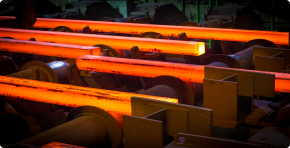


Testing materials under the conditions they’re likely to experience in service is vital to understand both performance and lifetime. For many components, this involves exposure to high temperatures, whether that’s in an aerospace engine or a large-scale bakery oven. Traditionally, high-temperature tensile testing has been the gold standard for assessing mechanical properties in such conditions. However, this method demands highly specific testing samples, leading to significant costs, operational complexity, and in some cases, making high-temperature testing impractical or even unfeasible.

In this case study with Renishaw, we uncover how the varying temperatures throughout a furnace have a significant impact on the mechanical properties of AM parts, in this case showing over 10% variation in yield strength, and how these findings have led Renishaw to optimise their heat treatment process, ensuring consistency and increasing confidence in part performance.

Where machining tensile specimens for testing is not an option, hardness is often considered as a solution. This poses a significant limitation; while hardness testing offers advantages such as affordability, speed, ease of use, and suitability for testing small specimens, a hardness number is not a fundamental material property. Furthermore, practitioners are limited to conversions into a limited set of material property values, as hardness numbers cannot give full stress-strain curves, which means that without further information finite element modelling cannot always be conducted accurately.
Signup to our newsletter
Stay up to to date with all of our latest product releases, events and publications.
© 2024 Plastometrex. All rights reserved.
We use cookies
Click ‘Accept’ to allow Plastometrex to use cookies to personalise this site, and to deliver ads and measure their effectiveness on other apps and websites, inclusing social media. Click ‘Reject’ if you do not want us to use cookies for this purpose. Find out more in our Privacy Policy