


Failure Analysis
Support your forensic investigations with uniquely rich datasets.
New Alloy Development
Rapidly screen the mechanical properties of your new alloy systems
High Throughput Tests
Measure stress-strain curves in under three minutes and reduce your materials testing turnaround times
Additive Manufacturing
Characterise the mechanical behaviour of your additively manufactured materials
Industry is modernising – are you?


Our mechanical testing systems are being designed to make mechanical testing simpler, faster and more intuitive, providing our clients with material insights not otherwise obtainable. They are built intelligently, with integration and automation at the forefront of their development. They are Industry 4.0 ready.


Why work with us?
Flexibility and Speed
We use our products to help companies like yours measure the mechanical properties of their materials more quickly, and more flexibly than they can with conventional testing methods.
First Class Support
We provide a rapid and rigorous technical support service to customers across the world. We also offer R&D support services through access to our team of world-leading materials scientists.
Experienced
We are an expert team of materials scientists with high-level expertise in advanced numerical modelling and data science techniques. We can be relied upon to deliver to our clients the state-of-the-art mechanical testing solutions that are needed to maintain a competitive advantage.


Matthew Hopkinson
Executive Vice President | Element Materials Technology
“This technology and this team have the potential to fundamentally change the way that we think about mechanical testing. Faster, simpler and more insightful testing will be appealing to all industries with an interest in measuring the strength of their materials”
Additively Manufactured Materials


Measuring the mechanical properties of AM materials has historically been very difficult and very expensive. Indentation Plastometry is the simplest solution to this broad industry challenge.
Case Studies
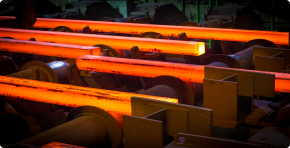


Testing materials under the conditions they’re likely to experience in service is vital to understand both performance and lifetime. For many components, this involves exposure to high temperatures, whether that’s in an aerospace engine or a large-scale bakery oven. Traditionally, high-temperature tensile testing has been the gold standard for assessing mechanical properties in such conditions. However, this method demands highly specific testing samples, leading to significant costs, operational complexity, and in some cases, making high-temperature testing impractical or even unfeasible.

In this case study with Renishaw, we uncover how the varying temperatures throughout a furnace have a significant impact on the mechanical properties of AM parts, in this case showing over 10% variation in yield strength, and how these findings have led Renishaw to optimise their heat treatment process, ensuring consistency and increasing confidence in part performance.

Where machining tensile specimens for testing is not an option, hardness is often considered as a solution. This poses a significant limitation; while hardness testing offers advantages such as affordability, speed, ease of use, and suitability for testing small specimens, a hardness number is not a fundamental material property. Furthermore, practitioners are limited to conversions into a limited set of material property values, as hardness numbers cannot give full stress-strain curves, which means that without further information finite element modelling cannot always be conducted accurately.
Signup to our newsletter
Stay up to to date with all of our latest product releases, events and publications.
© 2024 Plastometrex. All rights reserved.
We use cookies
Click ‘Accept’ to allow Plastometrex to use cookies to personalise this site, and to deliver ads and measure their effectiveness on other apps and websites, inclusing social media. Click ‘Reject’ if you do not want us to use cookies for this purpose. Find out more in our Privacy Policy